Loading…
2026 CRHNet Symposium 
Type: Insight Talk clear filter
Wednesday, May 13
 

1:00pm MDT

Re-centering Impacted People: A Meta-Analysis of Best Practices for Engaging Disaster-Affected Individuals
Wednesday May 13, 2026 1:00pm - 1:15pm MDT
Disaster response and recovery are most effective when the people directly affected are meaningfully engaged in decision-making, planning, and implementation. Yet, across Canada and internationally, emergency management systems still struggle to operationalize community-driven approaches beyond consultation. This presentation synthesizes findings from a meta-analysis of current research, after-action reviews, and practitioner literature to answer a core question: How can emergency management organizations more effectively engage disaster-impacted individuals as partners, not recipients, in response and recovery?

Drawing from Canadian case studies, global resilience research, and contemporary participation theory, this session distills cross-cutting best practices into actionable strategies for policy and practice. Themes include: enabling survivor leadership, co-production of recovery services, supporting spontaneous volunteer structures, removing institutional barriers, and aligning funding and governance mechanisms to support community agency rather than institutional control.
Speakers
KK

Kayla Klatt

Student, NAIT Disaster and Emergency Management Program
Kayla Klatt is an emerging emergency management professional with a background in administration, Indigenous advocacy, human rights, and disaster management. Her experience with the Alberta Emergency Management Agency sparked a strong interest in how individuals and communities come... Read More →
EW

Erica Woolf

Director, Central Operations, Alberta Emergency Management Agency
Erica Woolf is the Director of Central Operations with the Alberta Emergency Management Agency, where she leads provincial programs in emergency social services, business continuity, and alerting. With over a decade of public sector experience, she has advanced complex, cross-government... Read More →
Wednesday May 13, 2026 1:00pm - 1:15pm MDT
PIC 233 NAIT Producitivity and Innovation Centre

1:15pm MDT

Human-Centered Continuity Planning: Putting People at the Core of Business Resilience
Wednesday May 13, 2026 1:15pm - 1:30pm MDT
In an era of cascading crises, interconnected risks, and workforce fatigue, the next frontier of continuity and resilience is not built on plans, policies, or technology alone — it’s built on people. Human-Centered Continuity Planning reframes the traditional business continuity and emergency management lens by putting individuals — employees, students, communities, and leaders — at the heart of preparedness, response, and recovery efforts.

This presentation explores how leaders and practitioners can design continuity strategies that reflect human realities, emotional capacity, and adaptive potential. Drawing on real-world examples and emerging best practices, it argues that resilience is not just an organizational attribute; it’s a culture — one grounded in empathy, communication, inclusion, and trust.

Traditional continuity planning has long focused on assets, operations, and technology. We map our systems, document our processes, and create redundancy for infrastructure and data. But disruptions — whether a cyber breach, weather-related hazard, or organizational crisis — inevitably impact people first.

The COVID-19 pandemic made this truth impossible to ignore. When supply chains fractured, offices closed, and families juggled remote work and caregiving, the greatest determinant of continuity wasn’t the robustness of IT systems — it was the resilience, adaptability, and well-being of people. Employees became emergency responders, communicators, and problem-solvers in their own right.

Yet, many continuity frameworks still treat people as an operational resource, not as the core of resilience. Human-centered continuity planning challenges that paradigm. It insists that a plan cannot succeed if the people it depends on are burnt out, unsupported, or excluded from its creation.

In other words, a resilient organization starts with a resilient workforce.
Speakers
avatar for Claire Mechan

Claire Mechan

Owner/Principal Consultant, AILM Resiliency Consulting Agency
Claire is a highly experienced business continuity and emergency management strategist and leader with expertise across various sectors, including education and government. She holds the Certified Business Continuity Professional (CBCP) designation, a Master of Arts in Disaster and... Read More →
Wednesday May 13, 2026 1:15pm - 1:30pm MDT
PIC 233 NAIT Producitivity and Innovation Centre

1:30pm MDT

Inclusive and Equitable Wildfire Evacuation of Older Adults in Edson, Alberta
Wednesday May 13, 2026 1:30pm - 1:45pm MDT
Not everyone is equally affected by wildfires. Little is known about the experiences of older adults with access and functional needs during wildfires. This study examined the needs and challenges of older adults during the 2023 wildfire evacuation in Edson, Alberta. Interviews were conducted with 21 participants, including decision-makers, service providers, older adults involved in the evacuation, and their caregivers. Nine semi-structured interviews were completed with older adults, four with their family members, and eight key informant interviews were completed with service providers, emergency first responders, and practitioners involved in carrying out the evacuation or providing support to evacuees. To recruit participants, we employed a combination of purposive, snowball, and convenience sampling to access hard-to-reach interviewees. Participants were recruited through social media, existing institutional partnerships, and using publicly available contact information. All the interviews are audio-recorded to ensure accurate data capture. Findings from this study will inform evidence-based improvement of wildfire evacuation protocols and essential services during disasters, making evacuation more sensitive to the diverse needs and challenges of older adults.
Speakers
TM

Tara McGee

Professor and Associate Dean, University of Alberta
Dr. Tara McGee’s research focuses on individual, community, and organizational responses to wildfire. She has completed numerous studies on the human dimensions of wildfire, including wildfire risk perceptions, prevention, mitigation, preparedness, and evacuation. Most of her wildfire... Read More →
avatar for Sumaira Niazi

Sumaira Niazi

PhD Student and Research Assistant, Department of Earth & Atmospheric Sciences, University of Alberta
I am a Ph.D. student and Research Assistant at the University of Alberta. My research focuses on wildfire preparedness and evacuation, including projects on First Nations wildfire preparedness in British Columbia and inclusive, equitable evacuation planning for older adults in Edson... Read More →
avatar for Mahed Choudhury

Mahed Choudhury

Assistant Professor, Thompson Rivers University
Dr. Mahed Choudhury is an Assistant Professor in Wildfire Studies, Thompson Rivers University, Kamloops, BC, Canada. He earned a PhD degree in Natural Resource and Environmental Management from the University of Manitoba, Canada. Dr. Choudhury has conducted research across South Asia... Read More →
Wednesday May 13, 2026 1:30pm - 1:45pm MDT
PIC 233 NAIT Producitivity and Innovation Centre
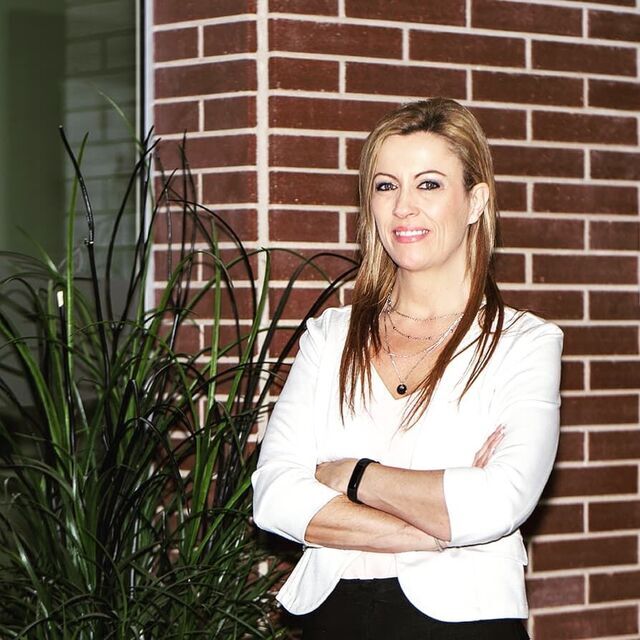
1:45pm MDT

Combining human insight and AI
Wednesday May 13, 2026 1:45pm - 2:00pm MDT
When a flood, landslide, or infrastructure failure threatens a community, the decisions made in the hours and days before and after  matter enormously. But too often, the tools available to decision-makers are too slow, too siloed, or too technical to translate into action at the right moment.

This session explores how WSP Canada and UrbanLogiq are partnering to change that. Together, they're building GeoRisk: a platform that combines the hard-won knowledge of scientists and engineers with the pattern-recognition power of artificial intelligence to give communities a clearer, faster picture of environmental and infrastructure risk.
The real story here isn't the technology, it's what happens when domain experts and AI developers sit down together. Delegates will hear how that collaboration actually worked in practice: the friction, the breakthroughs, and the choices making the system trustworthy and explainable to the people who rely on it.

The result is a tool that helps governments ask — and answer — questions that were previously out of reach: Where should we invest in mitigation first? What does this policy decision mean for risk five years from now? Who in our community is most vulnerable, and how do we account for that equitably?

Attendees will leave with a practical understanding of what it takes to pair human expertise with AI in high-stakes environments, and what this new generation of tools means for how communities plan, protect, and invest.
Speakers
avatar for Mark Masongsong

Mark Masongsong

CEO, Co-Founder, UrbanLogiq
Mark Masongsong is the Co-Founder and CEO of UrbanLogiq, bringing over a decade of government and political experience to the development of AI solutions for the public sector. He has presented on the future of government and AI at the White House, World Bank, U.S. State Department... Read More →
Wednesday May 13, 2026 1:45pm - 2:00pm MDT
PIC 233 NAIT Producitivity and Innovation Centre

2:00pm MDT

Q&A Session with Insight Talk Presenters
Wednesday May 13, 2026 2:00pm - 2:15pm MDT
A facilitated question and answer session with the Insight Talk presenters on human-centered disaster risk reduction.
Speakers
KK

Kayla Klatt

Student, NAIT Disaster and Emergency Management Program
Kayla Klatt is an emerging emergency management professional with a background in administration, Indigenous advocacy, human rights, and disaster management. Her experience with the Alberta Emergency Management Agency sparked a strong interest in how individuals and communities come... Read More →
avatar for Mark Masongsong

Mark Masongsong

CEO, Co-Founder, UrbanLogiq
Mark Masongsong is the Co-Founder and CEO of UrbanLogiq, bringing over a decade of government and political experience to the development of AI solutions for the public sector. He has presented on the future of government and AI at the White House, World Bank, U.S. State Department... Read More →
EW

Erica Woolf

Director, Central Operations, Alberta Emergency Management Agency
Erica Woolf is the Director of Central Operations with the Alberta Emergency Management Agency, where she leads provincial programs in emergency social services, business continuity, and alerting. With over a decade of public sector experience, she has advanced complex, cross-government... Read More →
avatar for Claire Mechan

Claire Mechan

Owner/Principal Consultant, AILM Resiliency Consulting Agency
Claire is a highly experienced business continuity and emergency management strategist and leader with expertise across various sectors, including education and government. She holds the Certified Business Continuity Professional (CBCP) designation, a Master of Arts in Disaster and... Read More →
avatar for Sumaira Niazi

Sumaira Niazi

PhD Student and Research Assistant, Department of Earth & Atmospheric Sciences, University of Alberta
I am a Ph.D. student and Research Assistant at the University of Alberta. My research focuses on wildfire preparedness and evacuation, including projects on First Nations wildfire preparedness in British Columbia and inclusive, equitable evacuation planning for older adults in Edson... Read More →
avatar for Mahed Choudhury

Mahed Choudhury

Assistant Professor, Thompson Rivers University
Dr. Mahed Choudhury is an Assistant Professor in Wildfire Studies, Thompson Rivers University, Kamloops, BC, Canada. He earned a PhD degree in Natural Resource and Environmental Management from the University of Manitoba, Canada. Dr. Choudhury has conducted research across South Asia... Read More →
Wednesday May 13, 2026 2:00pm - 2:15pm MDT
PIC 233 NAIT Producitivity and Innovation Centre
 
Thursday, May 14
 

9:15am MDT

Identifying and Understanding Drivers of Green Infrastructure for Flood-Risk Reduction
Thursday May 14, 2026 9:15am - 9:30am MDT
Building resilience to flooding begins with the communities who experience these impacts most directly. As cities face mounting pressures from climate change, urbanization, and increasing impervious surfaces, sustainable stormwater management has become crucial for reducing flood risk and safeguarding community well-being. Green infrastructure (GI) has proven effective as a nature-based approach, yet its adoption has often been limited by social, technical, and institutional challenges. Understanding the factors that supported successful implementation in past projects is therefore essential. This study employs a fuzzy-set Qualitative Comparative Analysis (fsQCA) across 16 GI case studies to identify the combinations of factors that enable successful adoption and implementation. The analysis showed that stakeholder engagement was a central driver, encompassing public participation by government and public agencies, interagency collaboration among diverse organizations, contributions from private-sector partners, and most notably community involvement. Although each form of engagement played a role, community involvement stood out across cases, as many projects actively included residents in planning and decision-making or were implemented specifically to address community needs. The study also found that Regulatory Policies and Regulations consistently operated alongside engagement, reinforcing their importance in supporting GI adoption. The findings reveal that strong regulatory frameworks paired with inclusive stakeholder engagement, especially community participation are the key factors underpinning successful and sustainable green infrastructure implementation for flood-risk reduction.
Speakers
avatar for Tarisai Mudiwa

Tarisai Mudiwa

PhD Student in Disaster and Emergency Management, York University
Tarisai Mudiwa is a PhD student in the Disaster and Emergency Management program at York University. She has experience working with organizations such as the South African Red Cross Society, UN-Habitat, and the non-profit the Thrive Project, contributing to humanitarian programs... Read More →
Thursday May 14, 2026 9:15am - 9:30am MDT
PIC 232 NAIT Productivity and Innovation Centre

9:30am MDT

Does Power Shape Resillience?
Thursday May 14, 2026 9:30am - 9:45am MDT
Resilience in emergency management is often described as something communities build from within through preparedness, relationships, and adaptive capacity. However, many communities, especially those in northern and remote regions, experience resilience as something shaped, enabled, or withdrawn by decisions made far beyond their control. This presentation examines how external power dynamics, including political, economic, and infrastructural factors, actively create or erode community resilience. It argues that emergency management must broaden its understanding of what truly determines a community’s ability to withstand and recover from disruption.

Using the recent cancellation of Starlink connectivity expansion in northern Ontario, which was connected to Canada and United States trade tensions, I explore how a decision unrelated to hazards had significant implications for emergency communication, digital inclusion, and community well-being. This case illustrates that resilience is not only a local outcome but also a product of dependencies on infrastructure providers, regulatory decisions, global supply chains, and policy environments.

The presentation introduces the idea of “externalized resilience,” which refers to resilience that depends on systems and actors outside community control. I discuss the implications for risk reduction, planning assumptions, northern and Indigenous communities, and the need to account for structural dependencies in resilience strategies. By examining resilience through the lens of power, the session encourages participants to rethink where vulnerability originates and how it can be addressed.
Speakers
avatar for Oghenekevwe Oghenechovwen

Oghenekevwe Oghenechovwen

PhD Student, Disaster and Emergency Management, York University
Oghenekevwe (Kevwe) Oghenechovwen (he/him) is completing a PhD in Disaster and Emergency Management at York University. His research focuses on understanding data gaps in disaster risk management through governance, power, and institutional perspectives. He has over six years of experience... Read More →
Thursday May 14, 2026 9:30am - 9:45am MDT
PIC 232 NAIT Productivity and Innovation Centre

9:45am MDT

When Information Is Infrastructure: Rethinking Communications in an Era of Cascading Risk
Thursday May 14, 2026 9:45am - 10:00am MDT
Canada’s disaster risk environment is evolving faster than many of our governance structures, planning models, and communication systems were designed to handle. Wildfires, floods, cyber incidents, public health emergencies, infrastructure disruptions, and societal pressures increasingly intersect to create compounding and cascading impacts across communities. In this context, communication must be understood as a core operational capacity within disaster risk reduction.

Internal information coordination impacts external communication, and when it is delayed, fragmented, or inconsistent, it results in heightened risk, making it difficult to establish and sustain public trust.

This session draws on recent Canadian and international events to explore the interconnected nature of contemporary emergencies and the role of communication in shaping risk perception, decision-making, and collective action. It also examines misinformation and digital disruption as emerging hazards that directly influence vulnerability and resilience.

Grounded in the theme of “Living the Lessons: From Impact to Insight,” this presentation synthesizes evidence, practitioner experience, and behavioural research to outline a forward-looking framework for 2026 and beyond. Participants will gain practical, scalable approaches they can adapt to their own organizations, including methods to strengthen internal information flow, improve cross-system message alignment, pre-bunk misinformation, and activate trusted networks to support community-level resilience. The session aims to strengthen linkages among research, policy, and practice to advance DRR outcomes across Canada.
Speakers
avatar for Shawna Bruce

Shawna Bruce

Director/Owner, M.D. Bruce & Associates Ltd.
Shawna Bruce, CD, MA (DEM), is a national thought leader in risk and crisis communications with over 40 years of experience across the Canadian Armed Forces, industry, and emergency management. She works with municipalities, industry partners, and First Nations communities to strengthen... Read More →
Thursday May 14, 2026 9:45am - 10:00am MDT
PIC 232 NAIT Productivity and Innovation Centre

10:00am MDT

Frontline Anchors: Institutionalizing the Role of Alberta Friendship Centres in Emergency Response
Thursday May 14, 2026 10:00am - 10:15am MDT
As Alberta faces compounding disasters, we must move beyond standard ideas of emergency responders and recognize the important role of community organizations, Friendship Centres, as frontline emergency responders.
Speakers
avatar for Jeannette MacInnis

Jeannette MacInnis

Chief Partnership Officer, Alberta Native Friendship Centres Association
With over 17 years of dedicated service within the Friendship Centre movement across British Columbia and Alberta, Jeannette is a seasoned leader specializing in government engagement, stakeholder outreach, and end-to-end program development. Professional Highlights & ExpertiseS... Read More →
Thursday May 14, 2026 10:00am - 10:15am MDT
PIC 232 NAIT Productivity and Innovation Centre

10:15am MDT

Q&A with Insight Talk Presenters
Thursday May 14, 2026 10:15am - 10:25am MDT
A facilitated question and answer session with the Insight Talk presenters on a different take on what resilient infrastructure and institutions mean.
Speakers
avatar for Jeannette MacInnis

Jeannette MacInnis

Chief Partnership Officer, Alberta Native Friendship Centres Association
With over 17 years of dedicated service within the Friendship Centre movement across British Columbia and Alberta, Jeannette is a seasoned leader specializing in government engagement, stakeholder outreach, and end-to-end program development. Professional Highlights & ExpertiseS... Read More →
avatar for Tarisai Mudiwa

Tarisai Mudiwa

PhD Student in Disaster and Emergency Management, York University
Tarisai Mudiwa is a PhD student in the Disaster and Emergency Management program at York University. She has experience working with organizations such as the South African Red Cross Society, UN-Habitat, and the non-profit the Thrive Project, contributing to humanitarian programs... Read More →
avatar for Oghenekevwe Oghenechovwen

Oghenekevwe Oghenechovwen

PhD Student, Disaster and Emergency Management, York University
Oghenekevwe (Kevwe) Oghenechovwen (he/him) is completing a PhD in Disaster and Emergency Management at York University. His research focuses on understanding data gaps in disaster risk management through governance, power, and institutional perspectives. He has over six years of experience... Read More →
avatar for Shawna Bruce

Shawna Bruce

Director/Owner, M.D. Bruce & Associates Ltd.
Shawna Bruce, CD, MA (DEM), is a national thought leader in risk and crisis communications with over 40 years of experience across the Canadian Armed Forces, industry, and emergency management. She works with municipalities, industry partners, and First Nations communities to strengthen... Read More →
Thursday May 14, 2026 10:15am - 10:25am MDT
PIC 232 NAIT Productivity and Innovation Centre
 
Share Modal

Share this link via

Or copy link

Filter sessions
Apply filters to sessions.